Guide
How to start a boat rental business: a first-season guide
From the first idea to a busy Saturday at your own dock: what you rent out, the rules, the numbers for one boat, insurance, bookings, the first day at the dock and your first season, month by month.
Updated 15 min readBy Iwan de Ploeg
It’s a Saturday in July. At ten, a family walks down to your dock with the booking already paid on their phone. By the time they’re back, the next group is waiting on the dock, and your boat has paid for its day.
This guide takes you from the idea to that Saturday. It’s for anyone who starts with one to three boats: a small motorboat on a Dutch canal, a pontoon on an American lake, or a boat with a skipper for groups. Iwan, who wrote it, ran a rental dock before he sold software for one. The rest we learned from the operators who run their business on Let’s Book.
What’s in this guide:
- Decide what kind of boat rental you’ll run
- Check the rules before you buy a boat
- Run the numbers for one boat
- Find a dock where your customers already are
- Choose boats made for rental
- Insurance, security deposit and a weather policy
- Take bookings online from the first day
- Your first day at the dock
- Your first season, month by month
- Get your boat rental business found
- When to add a second boat
- Questions about starting a boat rental business
Decide what kind of boat rental you’ll run
Boat rental comes in four shapes, and many businesses end up doing more than one:
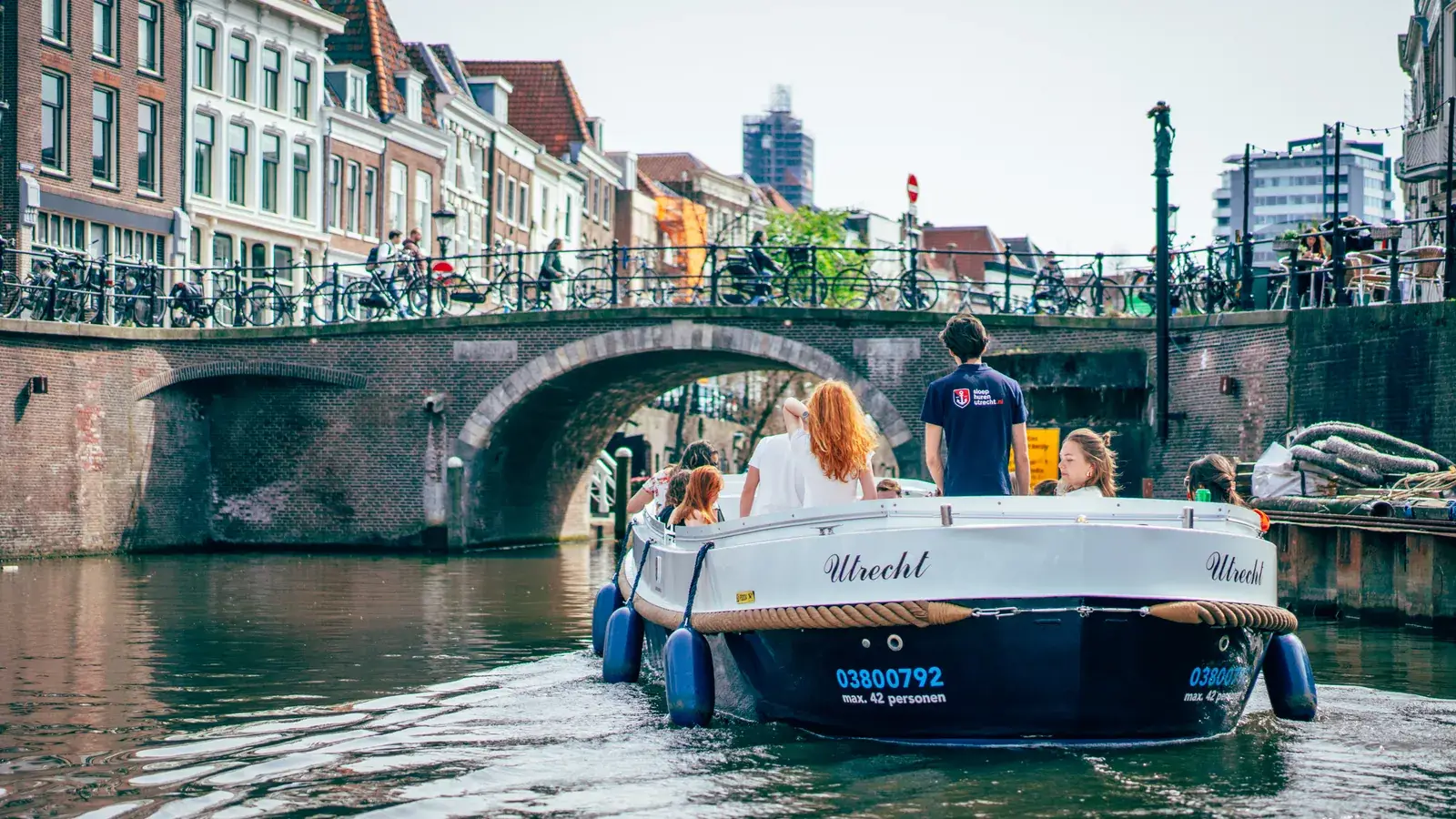
- Self-drive rental. Your customer drives, by the hour, the half day or the day.
- Private charters. You provide the skipper, and a group books the whole boat.
- Tours and departures. The boat leaves at set times, and people book a trip.
- A boat club. Members pay a fee and book boats from a shared fleet.
Start with one. The rules, the insurance and your price all depend on it.
You can add a second way of selling later, on the same boat. A small motorboat that goes out by the hour on weekdays can take a birthday party with a skipper on Saturday night. Our article with 9 ideas to rent out the same boat more often has more of these. And if you’d rather run a club with members from the start, read how to start a boat club.
Kayaks and SUP boards are a nice extra next to a boat. Sell them with the booking as an add-on, together with the picnic basket and the cooler.
Check the rules before you buy a boat
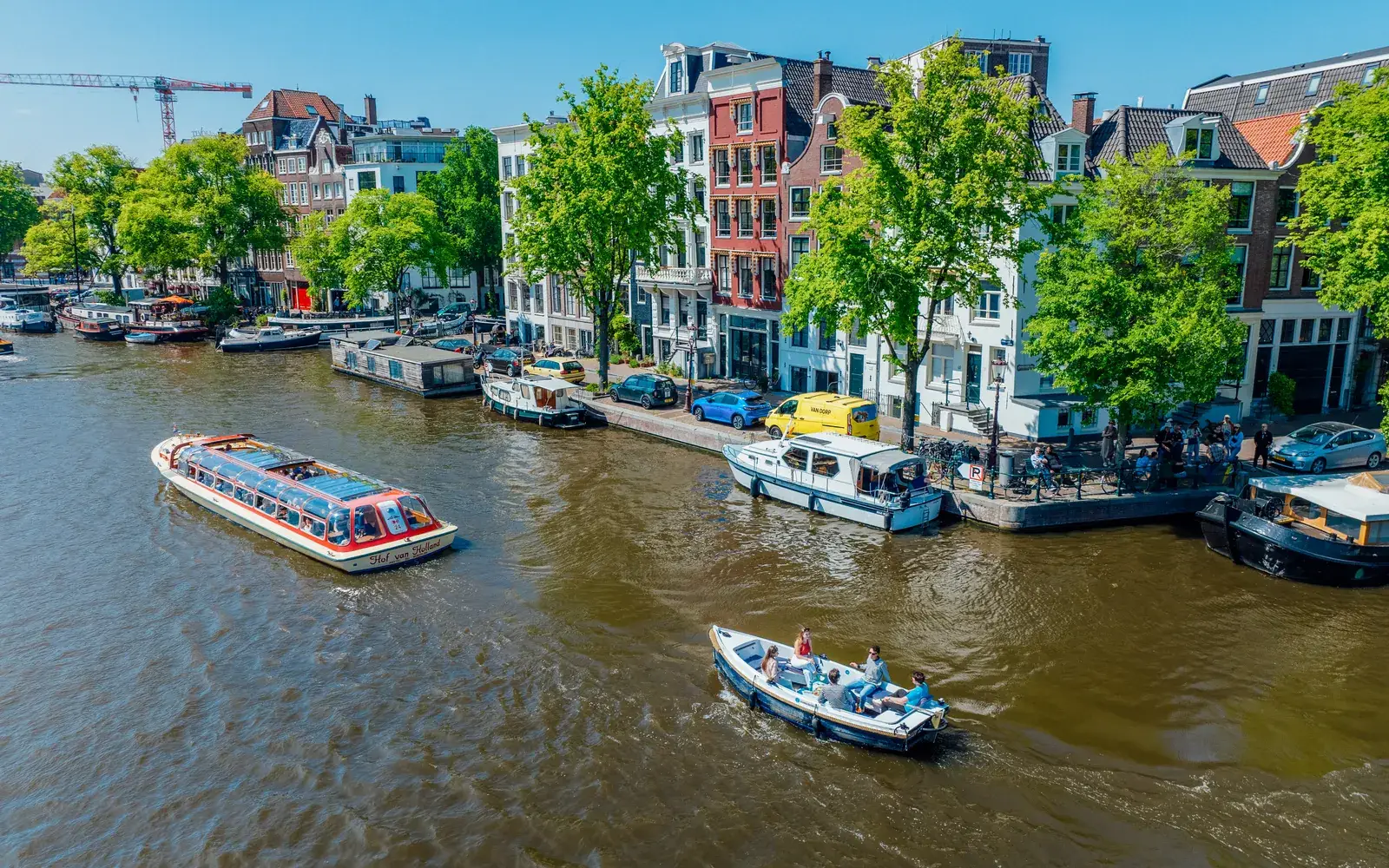
The rules decide which boats you can rent out, to whom, and with how many people aboard. Find out before you spend money on a boat, because a permit can take weeks.
In the United States
The main difference is between rental and charter. When your customer drives the boat, it’s a bareboat rental. When you provide the captain, your boat carries passengers for hire. Then an uninspected boat may carry at most six paying passengers, and your captain needs a Coast Guard captain’s license, known as the “six-pack” or OUPV license (USCG Auxiliary).
Many states add rules for liveries, the businesses that rent out boats. In Florida, a livery needs a free Livery Operator Permit from the state’s wildlife commission. It also needs insurance of at least $500,000 per person and $1 million per event, and every renter gets instruction before they leave the dock (FWC).
Ask your state’s boating agency what applies to you. Ask your city about a business license, and ask the marina what its lease allows.
In the Netherlands
You need no license for a boat shorter than 15 meters that can’t go faster than 20 km/h. That covers most small rental motorboats and electric boats. There is a minimum age. It’s 12 for an open motorboat under 7 meters that can’t go faster than 13 km/h, and 16 for other motorboats that need no license (politie.nl). A faster boat needs a license, a registration and a driver of 18 or older.
What you do need is permission from the municipality, for the mooring and often for the rental itself. Every town has its own rules. Amsterdam has stopped issuing new permits for passenger boats, rental boats included, until 1 April 2027 (gemeente Amsterdam).
Members of the trade association HISWA-RECRON can use the HISWA terms for renting boats. They cover cancellation, the deposit and the deductible.
Wherever you start, ask the harbor master who rents out boats already, and what it took them.
Run the numbers for one boat
Before you buy, work out what one boat has to earn. The math has two sides, and it fits on the back of an envelope.
What the boat costs per year. Add up everything the boat costs, booked or not:
- The purchase price, spread over the years you’ll use it
- Insurance
- The dock or slip, and winter storage
- Maintenance and repairs
- Fuel or charging, unless the customer pays for fuel
- Cleaning between trips
- Your website, booking software and payment fees
- A waiver service like WaiverForever, if you use one
How many hours it must be out. Divide that yearly cost by your price per hour. The answer is the number of hours the boat must be booked before it earns you anything.
An example with round numbers, only to show how the math works: one boat costs you $12,000 a year, and you rent it out at $100 an hour. Then it has to be out 120 hours before it pays for itself. That’s fifteen full days of eight hours. After that, every booked hour earns you money.
Now hold that against your season, honestly. The money comes on sunny weekends and in the summer vacation. A rainy week in August earns little. With twenty good weekends, fifteen full days is a real target. With eight, it’s tight.
What can you charge? Write down what the three nearest rental companies ask per hour, per half day and per day. Our article on the pricing model for your boat rental helps you set your own rates.
Where your bookings come from changes the math too:
| Where the booking comes from | What it costs you |
|---|---|
| Boatsetter | You keep 65% to 88.5% of the list price, depending on your boat and insurance plan (fee policy of March 5, 2025) |
| Getmyboat | An owner fee of 11.5% on US bookings (help center) |
| Your own website with Let’s Book | Standard: $30 (€25) a month plus 2.5% per booking. Pro: $175 (€150) a month plus 1% per booking. You also pay the fee of Stripe or Mollie, and about $0.12 per text message. |
Boatsetter and Getmyboat fees as published on October 1, 2026.
A marketplace brings you customers you wouldn’t find on your own, and that helps in your first season. On your own website the customer is yours, and their next booking costs you less.
Find a dock where your customers already are
Go where people already come for a day out: a town center, a campground, a beach, a lake with a restaurant on the water. Check how they reach you. Your customers need parking or a bus stop close by, and a safe spot to step on board. You need room on the dock to explain the boat.
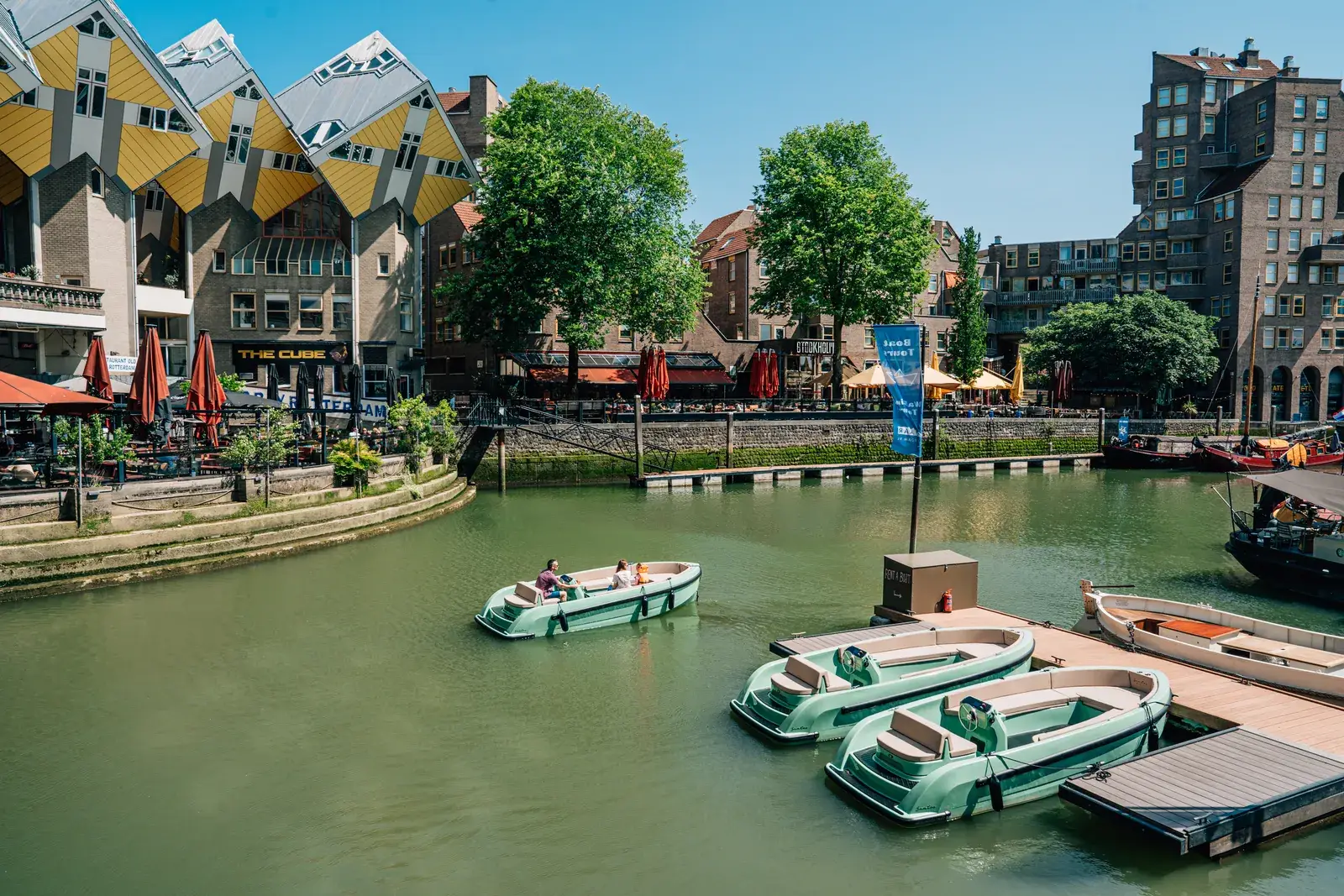
Then take a boat out yourself, on the route your customers will take. A good trip of one or two hours has something to see and a place to moor for a drink or a swim.
Talk to the harbor master or the marina early. One slip is enough to start, and they know which spots come free.
Choose boats made for rental
Start with the boat most of your customers ask for, and buy two of the same model if you can. One can stand in when the other is out of service, and customers get the boat they saw on your website.

A rental boat has a harder life than a private one. Look for a hull that takes a knock at the dock, seats that are easy to clean, and controls a first-timer understands in two minutes. A used boat costs less. A new one comes with a warranty and fewer days out of service in July. Our article on choosing the right boats compares motorboats, sailboats and electric boats.
Electric boats are quiet, cheap to run and welcome in city centers. Read what to look for when you switch to electric boats.
Some builders deliver boats ready for rental. In the Santos One, you can have a hardware module fitted that connects to Let’s Book. Nord Boats can deliver its boats with Sentinel Marine on board. Either way, your customer books online and starts the boat from their phone when the booking begins, and nobody has to hand over a key. That’s keyless rental, and it means a dock can run without staff on a quiet Tuesday.
Insurance, security deposit and a weather policy
Insurance. A private boat policy doesn’t cover rental. Ask an insurer who knows boat rental for a commercial policy. It should cover damage to your boats and your liability for what happens to your customers and to others. Check that it covers people with little or no experience on the water. The insurer will ask how you check and brief your renters, so write that down first.

Life jackets. Keep one on board for every person, in every size, children’s sizes too.
Security deposit. Your rental contract says who pays for damage, and a deposit backs it up. A simple way to set the amount is to make it the deductible on your insurance. Then the deposit covers the part of a claim you pay yourself. With Let’s Book the customer pays the deposit with the booking. After the trip, you refund it from the booking. Our article on asking for a deposit weighs up both sides.
Rental contract. Customers sign the rental contract at home before the trip, through our WaiverForever integration, so you don’t chase signatures on a busy dock. The account is your own, so WaiverForever bills you for it.
Weather. Decide now who calls off a trip, and when. Write down from which wind or which warning the boats stay in, and whether the customer gets a new date or their money back. Put it in your terms, so nobody has to argue on the dock on a stormy morning. When you move a booking in Let’s Book, the customer gets an email that shows what changed.
Take bookings online from the first day
Many people book a boat on their phone, often in the evening, often for the same weekend. When they can pick a time and pay in a few taps, they book right then. When they have to call, they wait until you’re open.

Let’s Book is booking software for boat rental. For a new business, it does this:
- The booking form runs on your own website.
- It works with a WordPress plugin, or a short piece of code for Wix and Squarespace.
- Customers pay online through Stripe or Mollie, including any deposit you set.
- A reminder email goes out the day before the trip.
- A text message reminds the customer before pickup, if you want. A text costs about $0.12.
- Buffer time keeps the minutes between two rentals free.
- A follow-up email goes out the day after the trip. In it, you ask for a review.
So you wake up to new bookings without having picked up the phone once. Standard costs $30 (€25) a month plus 2.5% per booking, with no setup fee and no minimum term (see pricing).
You don’t have to set it up alone. We start with a half-hour video call, with your own boats already in Let’s Book. Then we set it up with you, free. When you’re ready, you switch payments from test to live yourself.
Building your website too? Our step-by-step guide to your boat rental website walks you through it.
Your first day at the dock
The handover is where your customer decides whether they’ll come back. Keep it short, friendly and the same every time:

- Before they arrive, the booking is paid, the contract signed and the reminder sent.
- Check the name on the booking, and the age or license if your rules ask for it.
- Fit a life jacket on every child, and show where the others are.
- Explain the boat in two minutes: starting, steering, stopping and mooring.
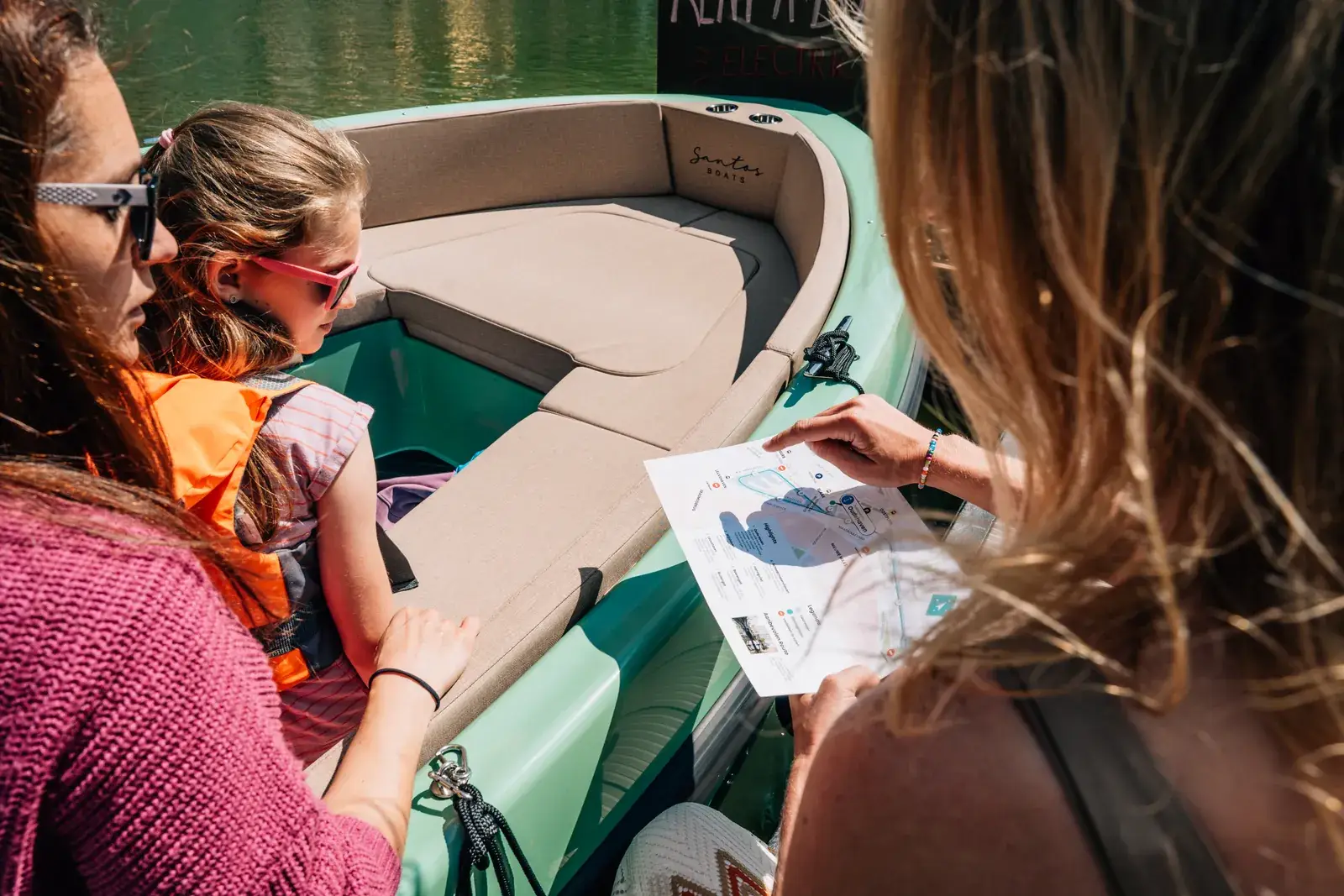
- Show the route on a map, where they may go and where not.
- Give them your phone number for when something goes wrong.
- Take photos of the boat before they leave and when they’re back.
- Clean it, charge or refuel it, and check it before the next group.
In Florida, instruction before every rental is the law. Everywhere else it’s what keeps your customers safe and your boats in one piece.
Then the day runs. In Let’s Book the planning warns you when a boat is out longer than the booking allows, so you know who to call. Our article on scheduling boat rentals shows how to plan the time between two trips.
Your first season, month by month
A season goes by fast, and a permit or an insurer can take weeks. This calendar is for a summer season in the Northern Hemisphere. Is your season longer, in Florida or on the Mediterranean? Stretch the calendar to fit it.
| When | What you do |
|---|---|
| November to January | Choose what you’ll rent out. Run the numbers. Ask the town, the state or the harbor about permits. |
| February | Get quotes from insurers. Sign for your dock. Order or buy your boats. |
| March | Put your website and booking form live. Set your prices and your seasons. Write your terms and your weather policy. |
| April | Let friends and family book a trip through your own website, and fix what they run into. Set up your Google Business Profile. |
| May | Open. Ask every customer for a review. Visit the hotels and campgrounds nearby. |
| June to August | The busy months. Watch which boats and which times sell out first. |
| September and October | Fill the quiet days with a lower price for those who book at the last minute. |
| After the season | Service the boats. Set the season next to your numbers, and decide on boat number two. |
In Let’s Book a season has a start date, an end date and its own prices. Within a season, the price can differ by day of the week. So a Tuesday in October can cost less than a Saturday in July. The price can also move with how far ahead a customer books.
Get your boat rental business found
Pick a name that’s easy to say, easy to spell and easy to find online. Put it on the boats and on a flag at the dock, so people who walk past know who you are.
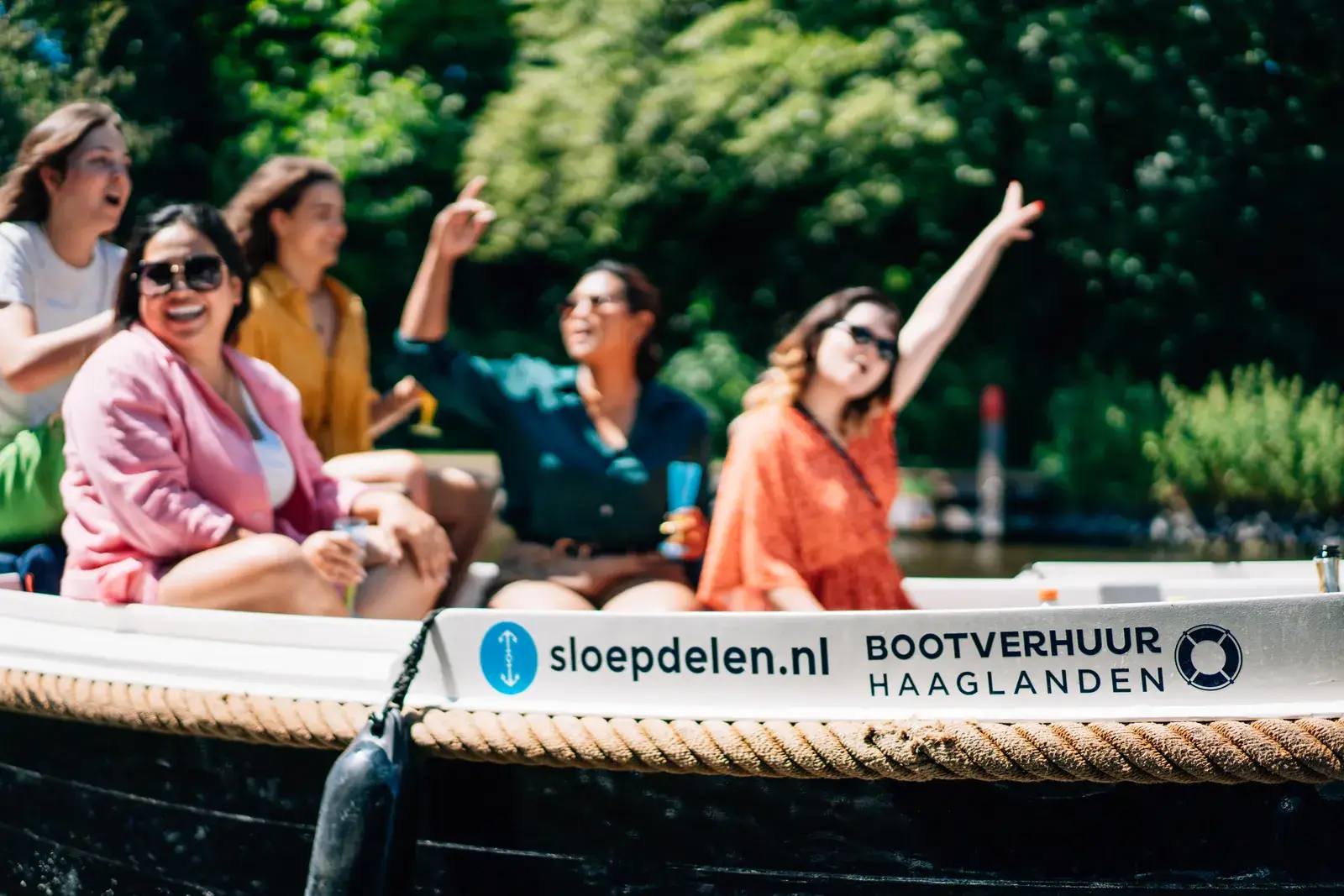
Then tell people you’re open:
- Add your business to Google Business Profile, so you show on the map.
- Ask every customer for a review on Google and Tripadvisor.
- Post photos from the water. Our social media tips help you start.
- Give hotels and campgrounds a booking link of their own.
- Hand out a discount code for your opening weekend.
- Send the local paper a photo and a few lines about your new business.
With a partner link, Let’s Book counts the bookings each hotel or campground sends you. So at the end of the season you know which partner to thank.
When to add a second boat
When your Saturdays are booked weeks ahead and customers ask for boats you don’t have, it’s time. Look at what sold before you buy. In Let’s Book, sales insights show what was sold over the period you pick, and this season sits next to the same period last year. Buy more of what sells out first.

A bigger business doesn’t only come from more boats:
- Add-ons like a picnic basket or a SUP board earn more per booking.
- Regulars who come back every summer can become members. Read about membership systems.
- A boat that’s quiet on weekdays can go out with a skipper for a company outing.
- Our article on the customer journey shows where customers book again, and where you lose them.
When you hire help, everyone gets their own login. Let’s Book has four built-in roles for a rental team: Administrator, Operations Manager, Planner and Dock Host. Whoever works the dock sees which boat goes out next and which one isn’t back yet.
Questions about starting a boat rental business
How much does it cost to start a boat rental business?
Most of the start-up money goes to the boat. Add insurance, a dock or slip, permits, a website and enough money to get through the months before the season pays. Start with the boats you can pay for, and grow from what sells.
Is a boat rental business profitable?
It is when a boat is booked for more hours than it takes to pay its yearly costs. Work out that number for one boat, as in the numbers above, and hold it against your season.
Do you need a license to rent out boats?
It depends on where you are. In the US you often need a state livery permit, and a captain you provide needs a Coast Guard license. In the Netherlands your customers need no license for boats under 15 meters and 20 km/h, but you need permission from the municipality.
Can you start a boat rental business with one boat?
Yes. One boat is enough to test your dock, your prices and your season. A second of the same model helps when the first is out of service.
Should I list my boats on Getmyboat or Boatsetter?
A marketplace can bring your first customers. It takes a share of every booking, so send the customers who come back to your own website, where their next booking costs you less.
Booking software for boat rental, tours and charters.
This article is from Let's Book, the software that lets your customers book and pay on your own website, and puts every boat on one planning. Made by people who rented out boats themselves.
Carry on reading
How to start a boat club
How to start a boat club in eight steps, from the first plan to your first members: the money, the boats, the location, the membership and the rules.

Santos and Let's Book launch a starter kit for boat rentals
A starter kit for a new boat rental: the Santos One electric boat, ready to connect to Let's Book, and bookings that start before the boat arrives.

Advantages of boat rental automation
What automation actually changes in a boat rental business: the bookings, the payments, the maintenance, the messages and the numbers.