Integrations
Integrations with the tools you already use.
Let's Book works with your own website and with Stripe or Mollie. Your bookings show up in your calendar and fill in your waivers. Through the API and webhooks, they reach your other software too.
Every integration at a glance.
Don't see your tool? Through Zapier, Make or n8n, your bookings reach thousands of other tools too.
Direct
Ready from day one














Through Zapier, Make or n8n
Set it up once, and every booking follows on its own










Booking form on your own website.
Add one line of code to the head of your pages, once. After that, every button or link to your booking form opens it over your own page. Guests choose and book without leaving your site. To pay, the form takes them to your payment provider.

Script
One line, in the head
WordPress plugin, Wix and Squarespace
On WordPress, a plugin adds the script for you. On Wix and Squarespace, you paste it once into the custom code settings.

Dock, boat, date
already chosen when it opens
Prefilled booking links
A link can carry the date, dock, boat model, group size and a discount code. So a campaign page opens the form on the right boat.

Event on your site
Booking made
JavaScript API for the booking form
Your developer opens, hides and closes the form from your own code. Your site gets an event at each step a guest takes.

Google Analytics 4 and Tag Manager
Add your analytics script next to the booking form script. The form then tells your analytics when a guest starts checkout, reaches the payment step and books.
Calendar feed and bookings export work without code.
The calendar feed and the export get your bookings out of Let's Book without a developer. So tomorrow's bookings sit in the calendar on your phone, and your bookkeeper gets a spreadsheet.
Calendar feed
A personal link puts your bookings in Google Calendar, Apple Calendar or Outlook, for a period around today. The calendar is view only. Your calendar app sets how often it refreshes, so a new booking can take a while to show.
Export bookings to Excel
The export puts every amount of your filtered bookings in its own column. One export holds up to 1,000 bookings. For more, narrow the filter, for example to one month.
Integrations through Zapier, Make or n8n.
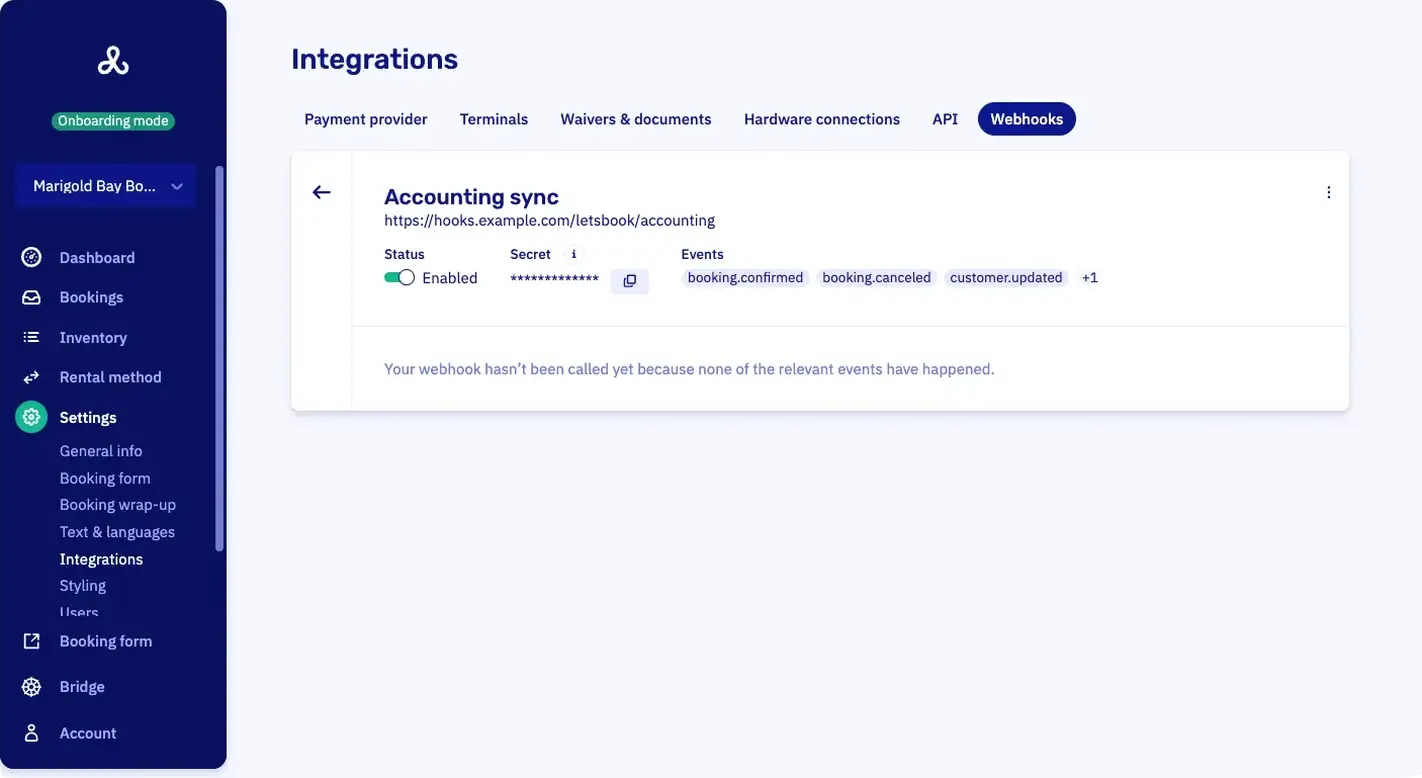
A webhook tells Zapier or Make the moment something happens in Let's Book. You set up the step once, and after that every booking finds its way to the tools you already use.
New booking, a row in Google Sheets
When a booking is confirmed, its reference, the customer, the times, the number of people and the amounts go into a new row.
New booking, a message to your team
Slack, email or the tool your team already reads: who's coming, when and with how many, with a link to the booking.
New customer, your mailing list
The name, email address and language go to your mailing tool. Only add customers who agreed to hear from you.
Canceled booking, a heads-up
When a booking is canceled, the person who plans the day hears it right away, so the boat can go to someone else.
There's no Let's Book app in their directories, so you start from their webhook step. It takes some setting up, once. Building it in your own software instead? The developer guide shows every event.
Connect through your site, the API or webhooks.
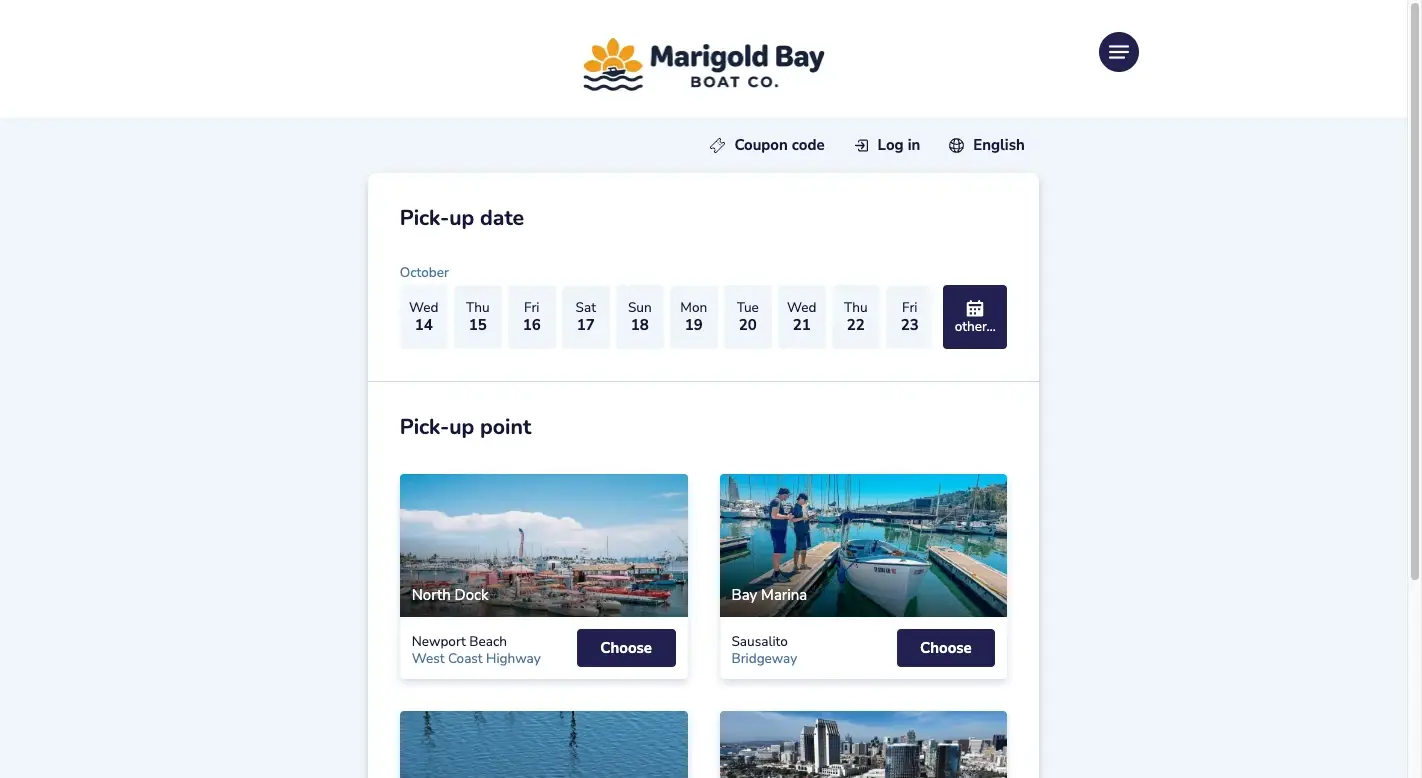
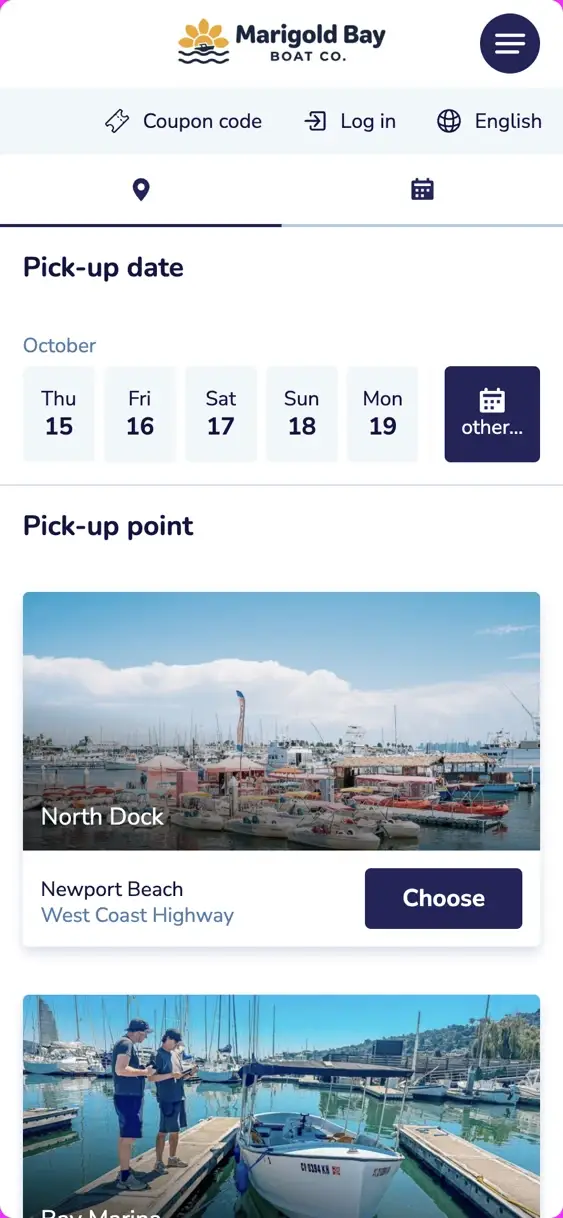
The booking form goes on your own site. The API and webhooks are optional, for when your own software needs the bookings too.
On your siteOne script tag.
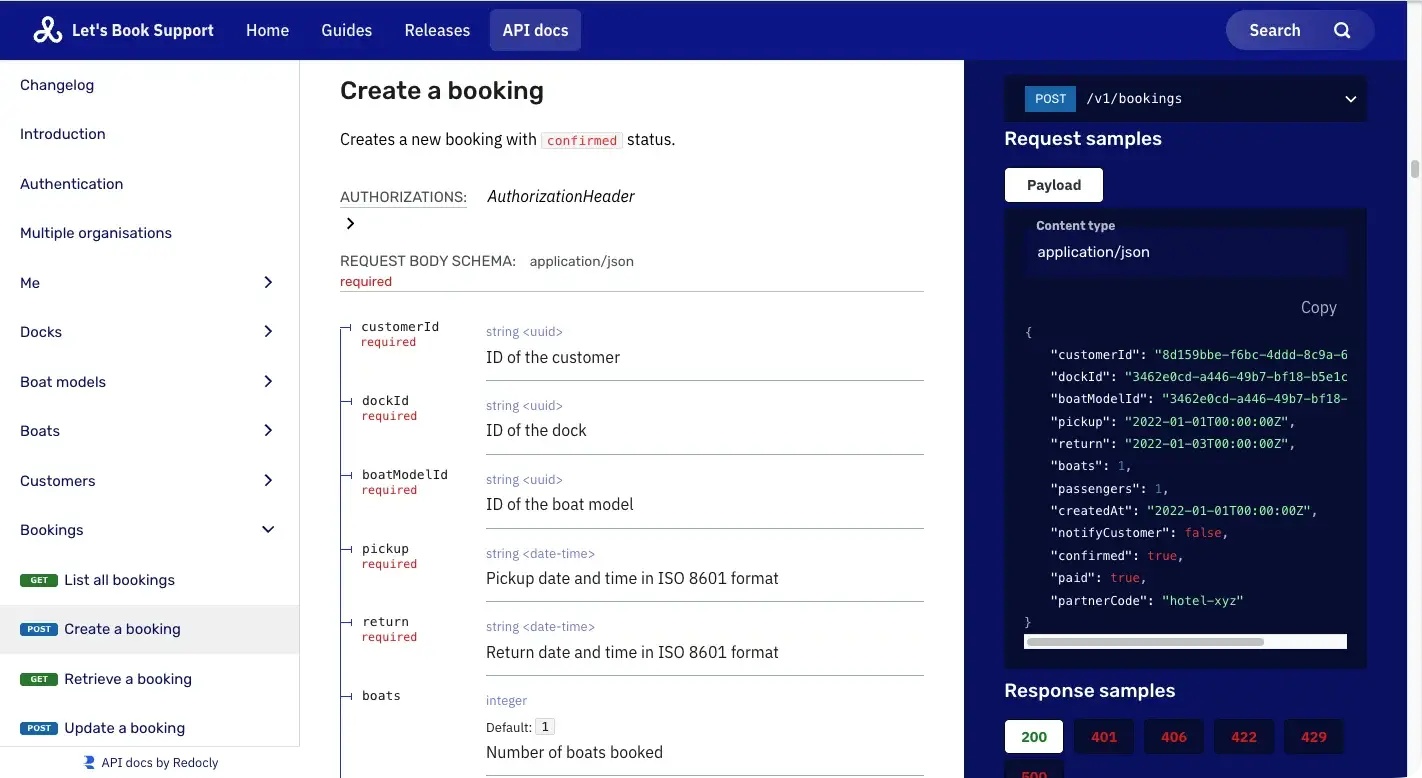
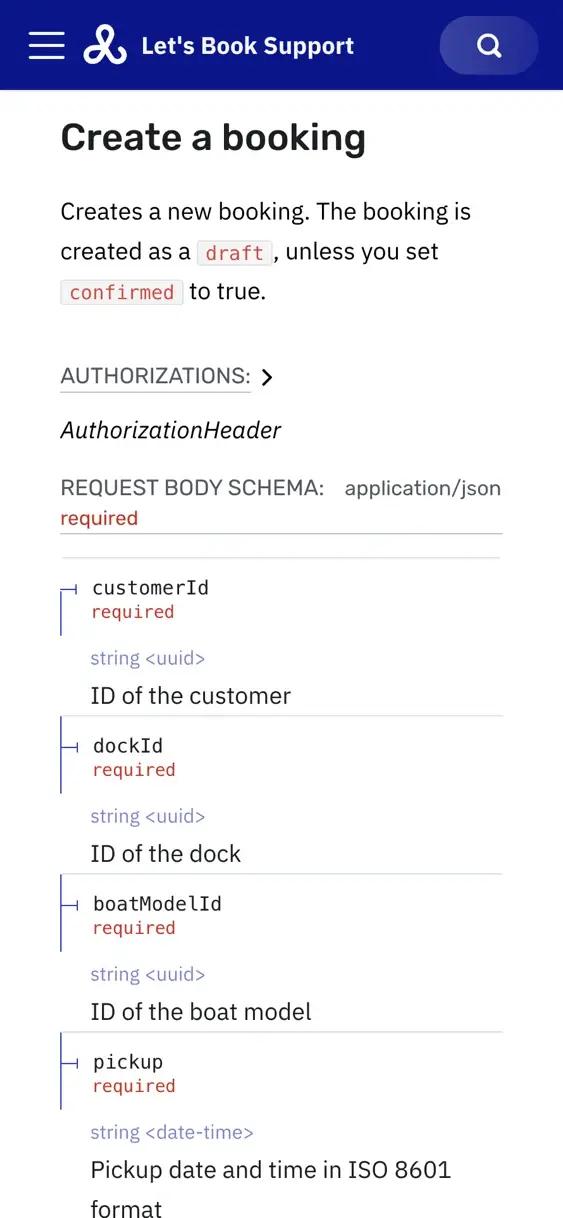
The APIBookings in and out.
WebhooksTold the moment it happens.
Stripe or Mollie, paid into your own account.
You connect your account by approving one screen at Stripe or Mollie. Guests then pay straight into that account. Payouts and disputes stay between you and your provider.
Card readers at the counter
Pair a reader in your provider's dashboard and it shows up in Let's Book. You choose which dock each reader belongs to.
Tap to Pay on your phone
With Mollie, your phone becomes the card reader. So you can take card payments at a dock with no counter.
Our booking fee comes off first
Your provider deducts our booking fee before the money reaches your bank. You can also pass that fee on to the customer.

Keyless rental and waiver partners.
On self-drive rental, a hardware module from one of these partners releases the engine for as long as the trip lasts. You buy it from the partner itself. Already have a hardware module on board that isn't on this list? Ask us. Waivers run through WaiverForever, on your own account that you pay them for.
Sentinel Marine
We recommend Sentinel Marine. It unlocks the engine when a trip starts and locks it when it ends, so nobody hands over a key.
Qondor
Qondor starts and stops the engine for each booking. Qondor itself also keeps the route of every trip and warns you when a boat leaves the area you set.
SMS-Relay
SMS-Relay starts and stops the engine by text message. It has no GPS, so it doesn't show where the boat is.
WaiverForever
Connect your account, and your published templates appear in Let's Book. You link each field to the booking once, and the waiver arrives with those fields filled in. Your customer signs, ticks the boxes and fills in the rest.
Partner booking links with their own rates.
A hotel or a reseller sells your boats through a link of their own. Every booking through that link carries their name. At the end of the month, you filter on that name and export the list.
Partner-specific rates
You set a higher rate for bookings through a partner. The customer pays that rate to you, and you pay the partner the difference yourself.
Assign phone bookings to a partner
The hotel desk calls to book for a guest? You put the booking on the hotel's name, and it gets their rates.
Partner codes in booking emails
The partner code is on the confirmation, the change and the cancellation email. So nobody argues later about which partner sent a booking.

Booking API with 25 webhook events.
The API reads and writes bookings and customers. It reads your boats, docks, add-ons and availability. It's in both plans at no extra cost. So your own software gets each booking without anyone retyping it.
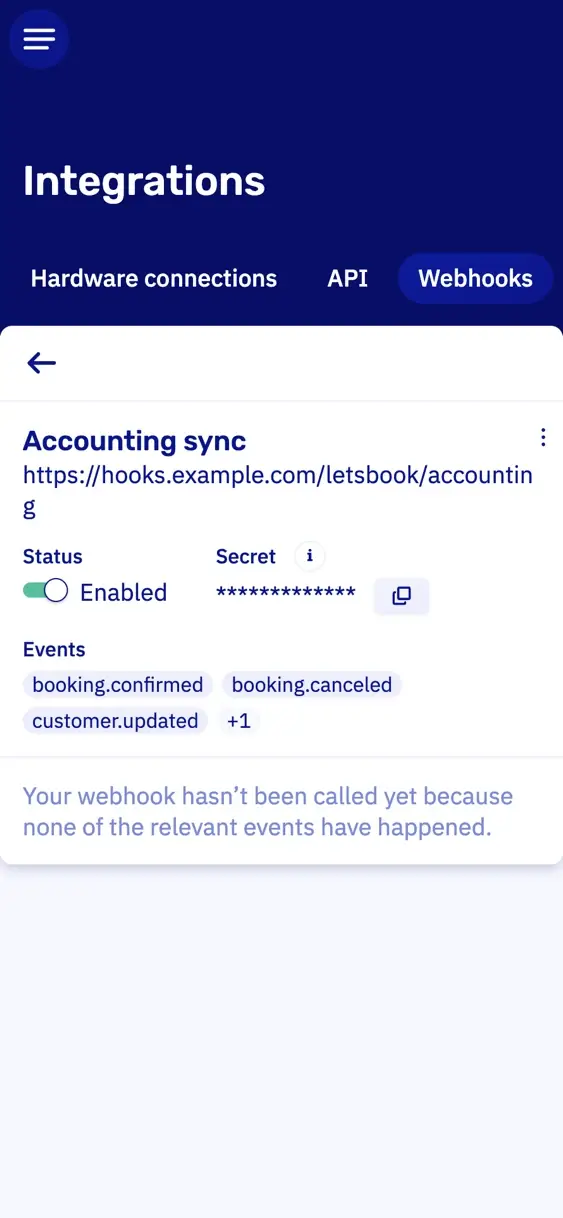
Pick which webhook events you receive
You pick from twelve events on the booking, from draft to the end of the trip. Add-on orders have three, customers four, products three and blockout periods three.
Signed webhooks you can verify
Every call carries a signature made with your own secret, so your server knows it came from Let's Book. The manual has verification code in 5 programming languages.
Retries when your server is down
Your server has five seconds to answer. If it's down for an hour, it still gets that hour's calls afterward.
One API key across several companies
A header on each request picks the Let's Book company. So an owner with three companies builds one integration for all three.
API keys with full admin rights
A key reaches every dock and is shown only once. Make one per integration, and delete it when the work is done.
Fetch only what changed
The bookings list filters on status, departure date and what changed since a given moment. So a nightly sync fetches one day rather than the whole season.
Integration and partner booking features.
These six are for the API, webhooks and partner bookings. Each one opens its line in the full list.
- One API key across several companiesOne API key reaches several companies.
- Partner and referral booking links with trackingA partner books through a link of their own, and the bookings are counted against it.
- Webhooks with signature verification and retriesA webhook is signed so you can verify it, and is sent again when your system is down.
- Partner-specific ratesA partner books at the rates you set for them.
- Google Analytics 4 and Tag Manager trackingThe booking form reports to Google Analytics 4 and Google Tag Manager.
- Assign a partner to a booking you take by phoneA booking you take by phone is put on a partner's name.
Questions about boat rental software integrations.
In your dashboard, the Integrations page has a tab each for payment providers, card readers, hardware, waivers, API keys and webhooks.
Is the API on both plans?
Yes, the full Let's Book API and the webhooks are in both plans. There's no higher tier for them and no separate charge. So you can get your own bookings out whenever you like.
Will you list my boats on Booking.com or GetYourGuide?
Not yet. We're building a channel manager, so your boats will soon be on GetYourGuide and Viator too. Until then, there are partner links. A hotel or reseller gets a link with their own rate, and every booking through it carries their name.
Does Let's Book connect to my accounting software?
Let's Book has no direct link to accounting software. The export splits the money into price, add-ons, costs, booking fee, paid, cash, balance, deposit and deposit returned. Through Zapier or Make, a webhook can turn each confirmed booking into an invoice in Moneybird, Exact Online, QuickBooks or Xero.
Can I use Zapier, Make or n8n?
Yes, Let's Book works with Zapier, Make and n8n through its webhooks and API. There's no Let's Book app in their directories, so you or your developer build the step once. A webhook is the trigger and an HTTP call is the action.
How much maintenance is this for my developer?
Let's Book announces every breaking change ahead of time and gives your developer time to migrate. Anything deprecated stays available for at least six months. The changelog has a feed, and the API specification is ready to download.
Which waiver tool does Let's Book work with?
Let's Book works with WaiverForever. You build your templates in your own WaiverForever account, which you pay them for. You connect that account to Let's Book and link each field to the booking, once. Then each waiver arrives with those fields filled in, and your customer signs, ticks the boxes and fills in the rest.
Connect Let's Book to your tools.
In a half-hour video call, we show you Let's Book with your own boats already in it, if you send us your website. No strings attached.