Guide
How to price a day charter in Greece and the Mediterranean
A guest compares your price with three other boats in the harbor, in about a minute. Here's how a charter with one to five boats in the Mediterranean builds a price that a guest understands right away and that covers the fuel.
5 min readBy Iwan de Ploeg
A family from Chicago asks what a day on your boat costs. You say €1,400. Then the questions come. Does that include the skipper? And fuel? Can we have lunch on board? What if it’s windy? Every answer changes the price they had in mind, and every question is a moment they can book someone else.
A good charter price answers those questions before they’re asked. This article walks through it for a skippered day charter in Greece and elsewhere in the Mediterranean, with one to five boats.
Sell trips, not hours
Guests find it hard to picture “€250 an hour”. They can picture “a half day to the caves and the beach on the other side, back at two”. So sell a few fixed trips, each with one price:
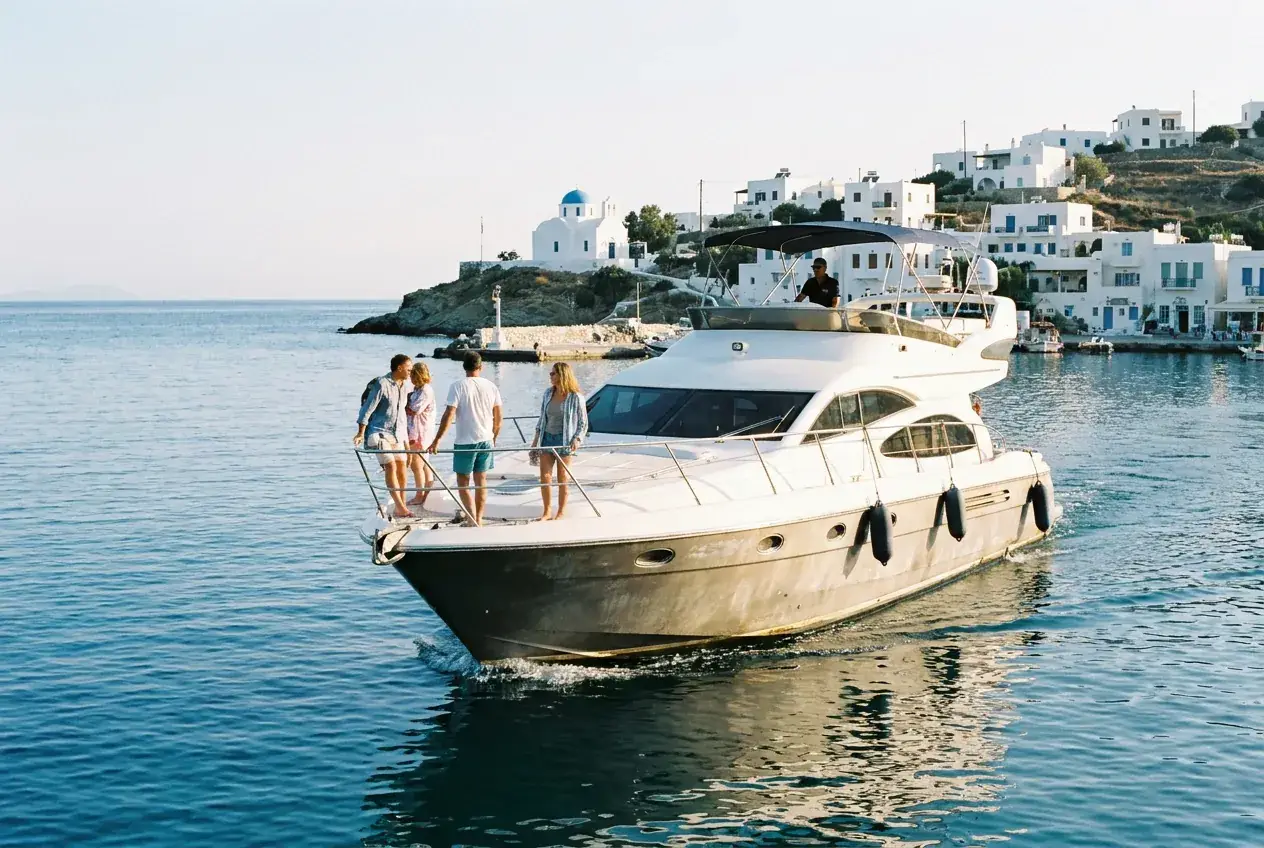
- A half day, morning or afternoon, four hours for example.
- A full day, with a lunch stop in a cove.
- A sunset trip, shorter, with the evening light.
In Let’s Book each trip gets its own departure times and its own package price instead of an hourly rate, so the sunset trip can cost more than the morning. A price can also change with the number of people in the booking, so eight guests can pay more than a couple on the same boat.
Price the boat, then everything that goes with it
The skipper. Guests compare the total. If the skipper is included, say so next to the price. If the skipper is extra, show it right under the price, not at the end of the booking.
The fuel. On a fast motorboat, fuel is a cost you don’t control. There are three honest ways to handle it:
- Included, and priced into the trip. The simplest for the guest.
- Included up to a route, with anything beyond it charged after the trip.
- Charged at cost after the trip, at the rate on your pump receipt.
With the second and the third, Let’s Book can settle what’s still owed out of the security deposit before the rest goes back to the guest. When the deposit covers it, nobody has to pay again on the dock.
The extras. Lunch, drinks, snorkel gear, a paddleboard, towels, a photographer. In Let’s Book each add-on has its own price, per person or per hour of the trip, and the guest picks them while booking. You print the day’s orders as a picking list, per booking, so the crew knows what to bring on board.
The season
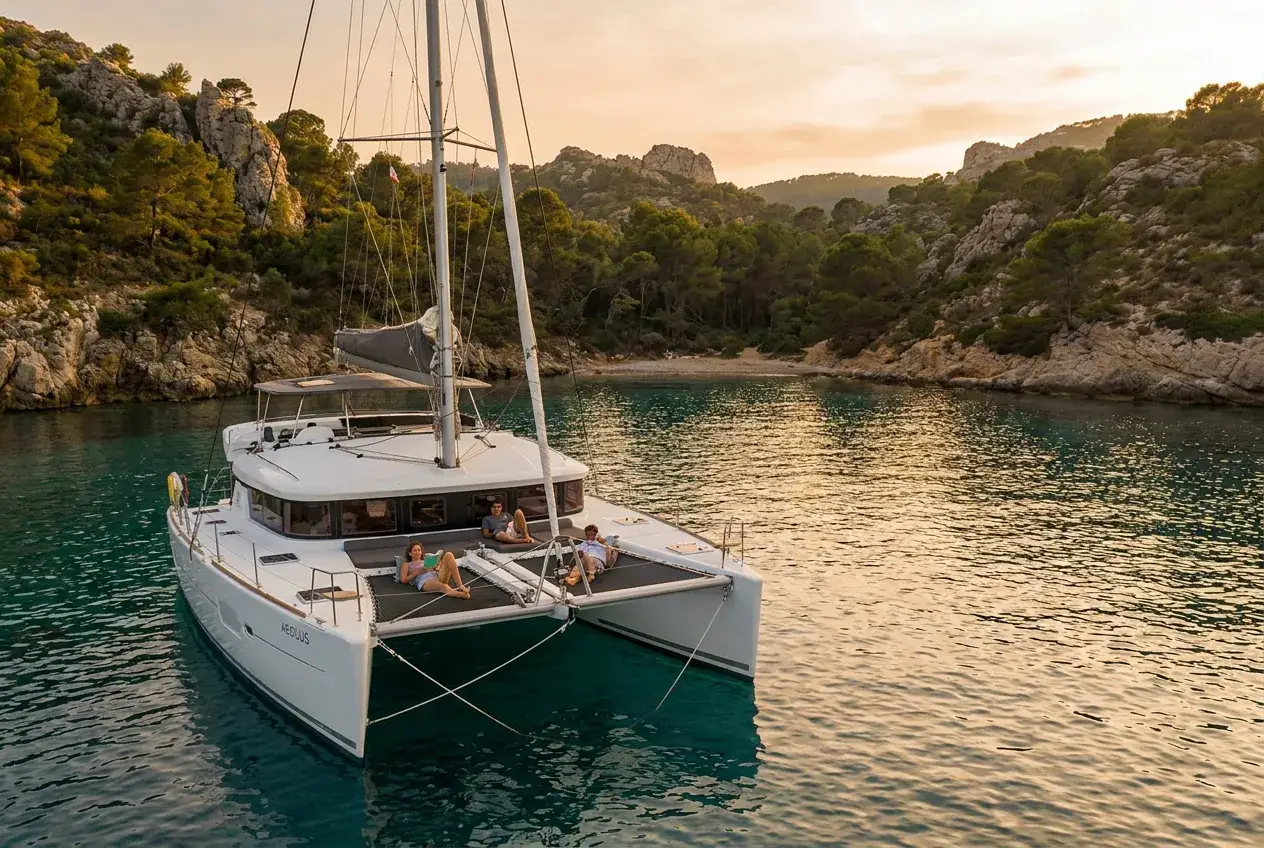
July and August sell themselves. In the shoulder months, your price decides how often the boat goes out. In Let’s Book a season has a start and an end date, with its own prices, and a price can differ by day of the week. The price can also move with how far ahead a guest books, so an early booking for June gets a better rate, and an empty boat tomorrow afternoon can still go out.
Down payment, balance and the security deposit
Take part of the price when the guest books, and the rest before the trip. Let’s Book doesn’t send the guest a reminder for the balance yet. You collect it yourself: in cash, on a card reader, or with a payment link from the booking, with the date it’s due. When you take a booking yourself, the confirmation carries that link already. A payment by bank transfer or in cash is registered on the booking, so the balance stays right.
Take a security deposit with the balance, and return it after the trip. If something needs repairing, you keep part of it back, with every withholding on its own line. Our article on asking for a deposit weighs up both sides.
The meltemi and your cancellation policy
In the Aegean, the meltemi blows from June to September, strongest in July and August. It usually starts in the early afternoon at force 4 to 5, and it can reach force 5 to 7 (sailingissues.com). Some days a trip is fine in the morning and not after lunch.
Decide before the season what a windy day means:
- Who calls it off, and by when. The evening before, or at seven in the morning.
- What the guest gets. Another day first, their money back if there is no other day.
- What a guest who cancels themselves pays. Write in your terms what canceling costs, for example more as the trip gets closer.
In Let’s Book you move the booking to another day, and the guest gets an email that shows what changed. When a guest cancels, you keep your cancellation fee from the booking and refund the rest.
Tips, and what your guests expect
On a yacht charter, guests generally tip 10% to 20% of the total cost, says the American site Discover Boating. Not every guest knows what’s expected. Say in your confirmation email whether you expect a tip. You write that email yourself in Let’s Book.
An example, with round numbers
This example shows how the pieces fit. It’s not a price for your harbor.
| Item | Amount |
|---|---|
| Half day, four hours, with skipper, fuel included for the usual route | €900 |
| Lunch on board, 8 people at €25 | €200 |
| Total for the trip | €1,100 |
| Down payment when they book, 30% | €330 |
| Balance, a week before the trip | €770 |
| Security deposit, returned after the trip | €500 |
The guest sees one price for the trip and knows what it includes, and you know the fuel is paid for.
When a charter guest books with you directly, more of this price stays in your pocket. Read how to get more direct bookings for your yacht charter.
Booking software for boat rental, tours and charters.
This article is from Let's Book, the software that lets your customers book and pay on your own website, and puts every boat on one planning. Made by people who rented out boats themselves.
Carry on reading
More direct bookings for your yacht charter, less commission
How a charter with one to five boats in Greece or elsewhere in the Med gets more guests to book direct, and keeps the commission a broker would take.
Charter management for 1 to 5 boats, from message to payment
How a charter company with one to five boats in the Mediterranean runs the season: one calendar, the down payment, the contract, the galley and the wind.
Trends in boat rentals for the 2027 season
Eight boat rental trends for 2027 with sources: travel close to home, offline and late bookings, OTAs, phone payments, electric boats, clubs and AI search.