Guide
How to connect an electric boat fleet
A connected fleet ties a hardware module in each boat to its booking in Let's Book. Your customer starts the boat from their phone at the booked time, and nobody from your team has to stand on the dock.
Updated 4 min readBy Iwan de Ploeg
A summer evening at eight, the sun still on the water. Your customer walks onto the dock, taps start on their phone and the motor switches on. You are at home having dinner. A connected fleet makes that possible.
What is a connected fleet?
A connected fleet is a set of boats with a hardware module in each one. The hardware module can start and stop the engine. In Let’s Book each hardware module belongs to one boat. The engine starts and stops with the trip on the booking. So the booking shows when the boat left and came back.
For your customer, the booking replaces the key. They get a text with a link, tap start at the time their booking begins, and end the trip on their phone when they moor. For a day, it feels like their own boat.
How does a connected fleet work?
Each boat gets a hardware module from Sentinel Marine, from Qondor, or an SMS relay. You get the hardware module from the partner, on your own account with them, and it is fitted in the boat. In Let’s Book you then link your Sentinel account, or enter your Qondor center ID. On each boat you add its serial number or tracker ID. With an SMS relay, you enter its phone number on the boat.
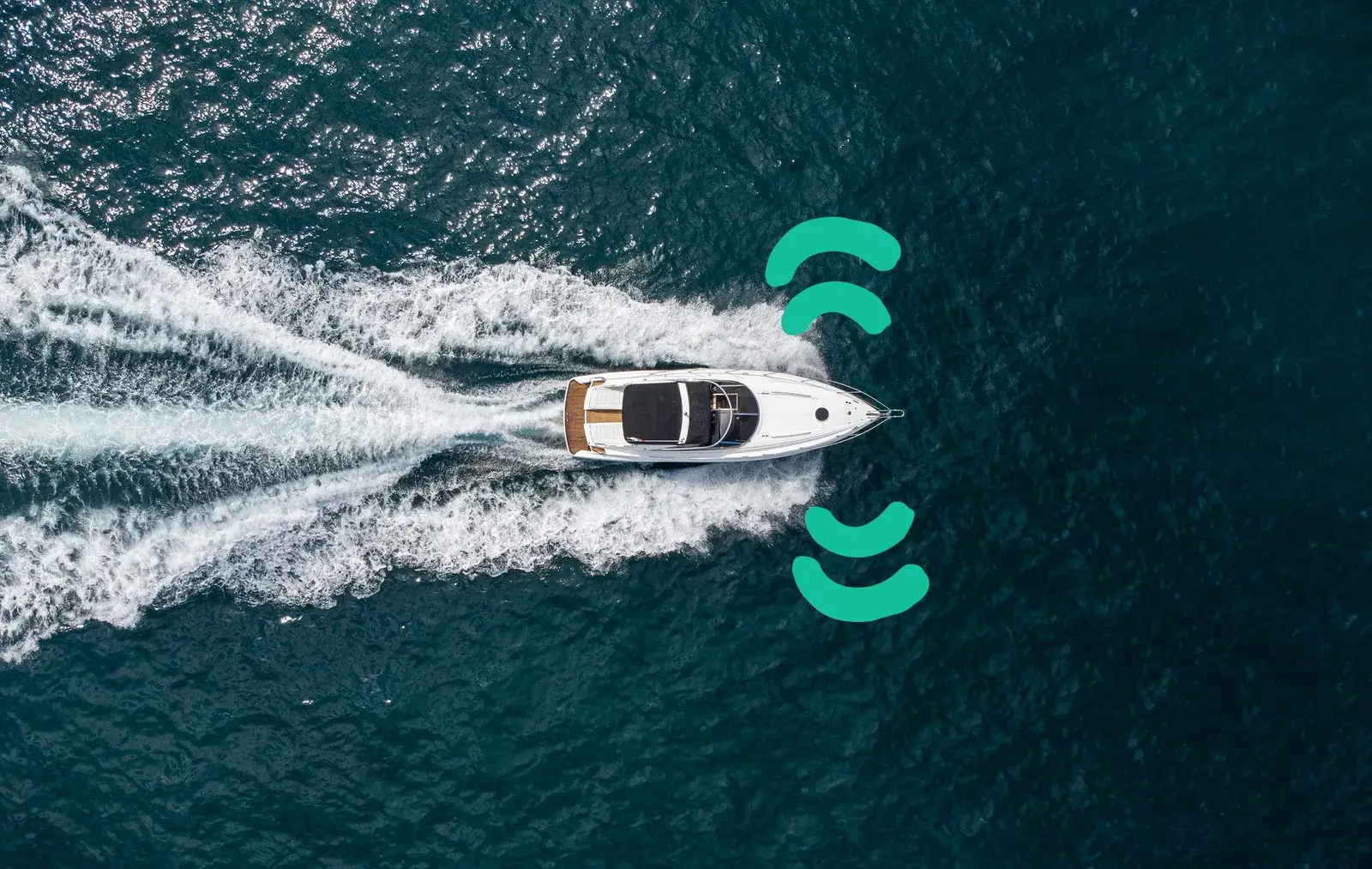
How each one works:
- Sentinel Marine unlocks the engine when the trip starts and locks it again when the trip ends.
- Qondor releases the engine when the trip starts and stops it when the trip ends.
- An SMS relay starts and stops the engine by text message.
Sentinel Marine and Qondor also give you a login of your own. There you see more than in Let’s Book, like where each boat is. In Qondor’s app you see the route of every trip. When a boat leaves the area you set, Qondor warns you.
What a connected fleet saves you
Nobody at the dock for the handover
The customer starts and stops the boat themselves. So an evening trip or an early morning no longer needs somebody waiting with a key, and you can rent out those hours.
A walk-in calls you from the dock on a quiet Tuesday and wants to go out now. You make the booking and start the boat from the fleet view, wherever you are.
You see a late boat on your screen
A boat that isn’t back on time turns red in the fleet view. Switch on the late-return rule, and a booking whose boat came back late gets a flag. You and your staff read the whole fleet from one screen: who is out, who is due back and who leaves next.
The trip writes its own times
Each trip records when the boat left and when it came back. Nobody writes times on a clipboard. If a customer says they were back on time, the trip on the booking shows when they moored. That helps when you keep part of the deposit.
A boat that will not start
An engine will not start, and your customer is standing in front of it. You move the trip to another boat, straight from the booking. The reference and the paperwork stay the same.
You take a boat out of service for maintenance on its page in Let’s Book. Move it back to its dock from the day it’s ready, and from then it can be booked again. More on planning maintenance in how to schedule boat rentals.
How to get started
Start with one boat, or with a few. Boats without a hardware module keep their key, as they always have. Choose a hardware module, get it from Sentinel Marine or Qondor, and have it fitted. The connected fleet itself is in both the Standard and the Pro plan.
Buying a new boat? Santos Boats delivers the Santos One ready to connect to Let’s Book. Nord Boats can deliver its boats ready to rent out, with Sentinel Marine on board. Still choosing between fuel and electric? Read what to look for when you switch to electric boats.
Then link the hardware module in Let’s Book. We help you set it up, and on the connected fleet page you read how it works day to day.
Booking software for boat rental, tours and charters.
This article is from Let's Book, the software that lets your customers book and pay on your own website, and puts every boat on one planning. Made by people who rented out boats themselves.
Carry on reading
More direct bookings for your yacht charter, less commission
How a charter with one to five boats in Greece or elsewhere in the Med gets more guests to book direct, and keeps the commission a broker would take.
How to price a day charter in Greece and the Mediterranean
How to price a skippered day charter in Greece and the Med: half day, full day or sunset, the boat, fuel, extras, the season and the meltemi.
Charter management for 1 to 5 boats, from message to payment
How a charter company with one to five boats in the Mediterranean runs the season: one calendar, the down payment, the contract, the galley and the wind.